Sustainability
Sustainability: Your Economic and Environmental Advantage
We design industrial facilities that combine responsibility with cost-effectiveness.Through intelligent energy concepts and maximum resource efficiency, you canactively reduce operating costs, lower CO₂-related taxes and strengthen your positioning as a future-oriented company.



Sustainability in Industrial Construction Means Above All: Efficiency
Practical and tailor-made sustainability strategies in industrial construction today mean more than just environmental responsibility. Building in a future-oriented, innovative, and sensible way means reducing CO₂ emissions, lowering operating costs, and minimizing or optimizing demolition and reinvestment costs. By complying with the EU Taxonomy, determining life cyclecosts (LCC) and applying certifications such as LEED, SNBS or DGNB, we take a holistic view of the building’s entire life cycle. Resource efficiency, space optimization, daylight utilization and self‑sufficiency strategies not only improve ecological footprint but also enhance workplace quality and long-term flexibility. Sustainable building materials and intelligent planning create high‑quality, future-ready industrial buildings that are certified, efficient and economically sound.
Economy
Ecology
Social
Certifications
Smart. Efficient. Future-proof.
Our sustainability components generate measurable ecological and economic benefits.
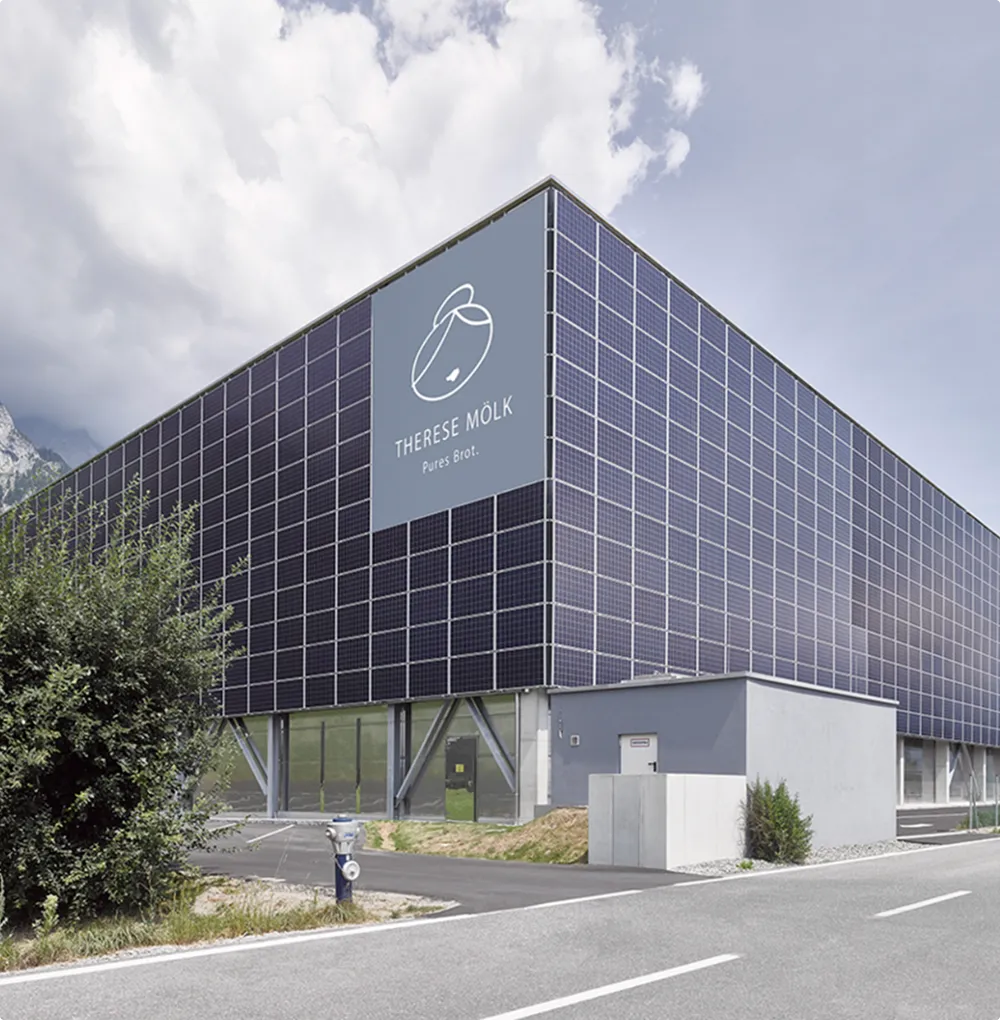
Building-Integrated Photovoltaics on a 1,475 m² Facade at the Frozen Goods Warehouse
As part of an expansion of a frozen‑food logistics center for a major Austrian bakery, the majority of the facade was equipped with a building-integrated photovoltaic system.The total collector area of the production facility for baked goods and meatproducts, including the deep‑freeze warehouse, now amounts to 6,300 m². The energy generated could supply approximately 170 households (four people each)with electricity for an entire year.
Energy Efficiency According to LEED Gold Standard
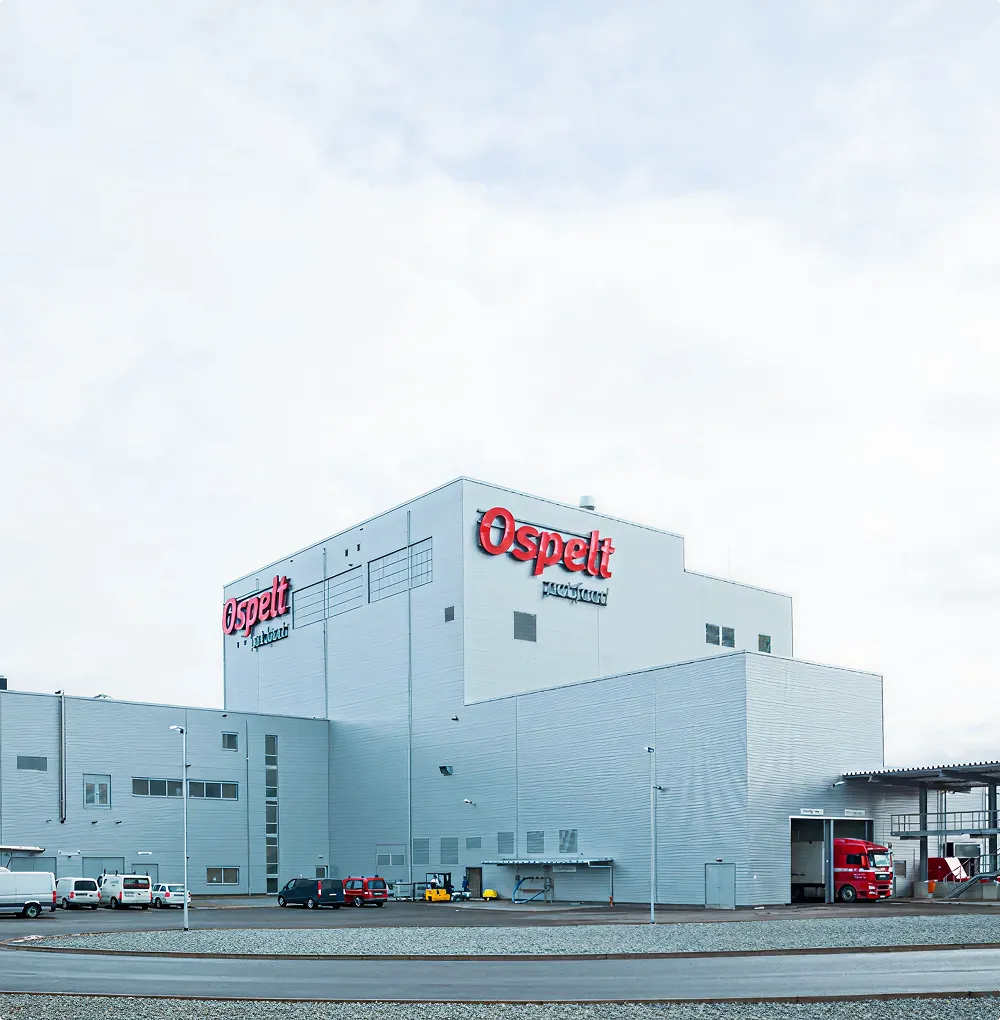
During the design of an energy‑intensive extrusion plant, the central challenge was maximizing energy efficiency. Waste heat from production was used to heat the office and staff areas. We designed a combined heat and power (CHP) plant that practically covers the entire electricity and heat demand. With an efficiency of up to 97%, the plant significantly exceeds the average for public power generation and greatly reduces CO₂ emissions. The investment in the CHP plant paid off after only one and a half year. A variety of additional measures –such as LED lighting throughout the facility and the use of locally sourced materials – contributed to a fully sustainable greenfield construction. This result was confirmed by a LEED Gold standard pre-assessment.
Highest Standards in Energy Efficiency
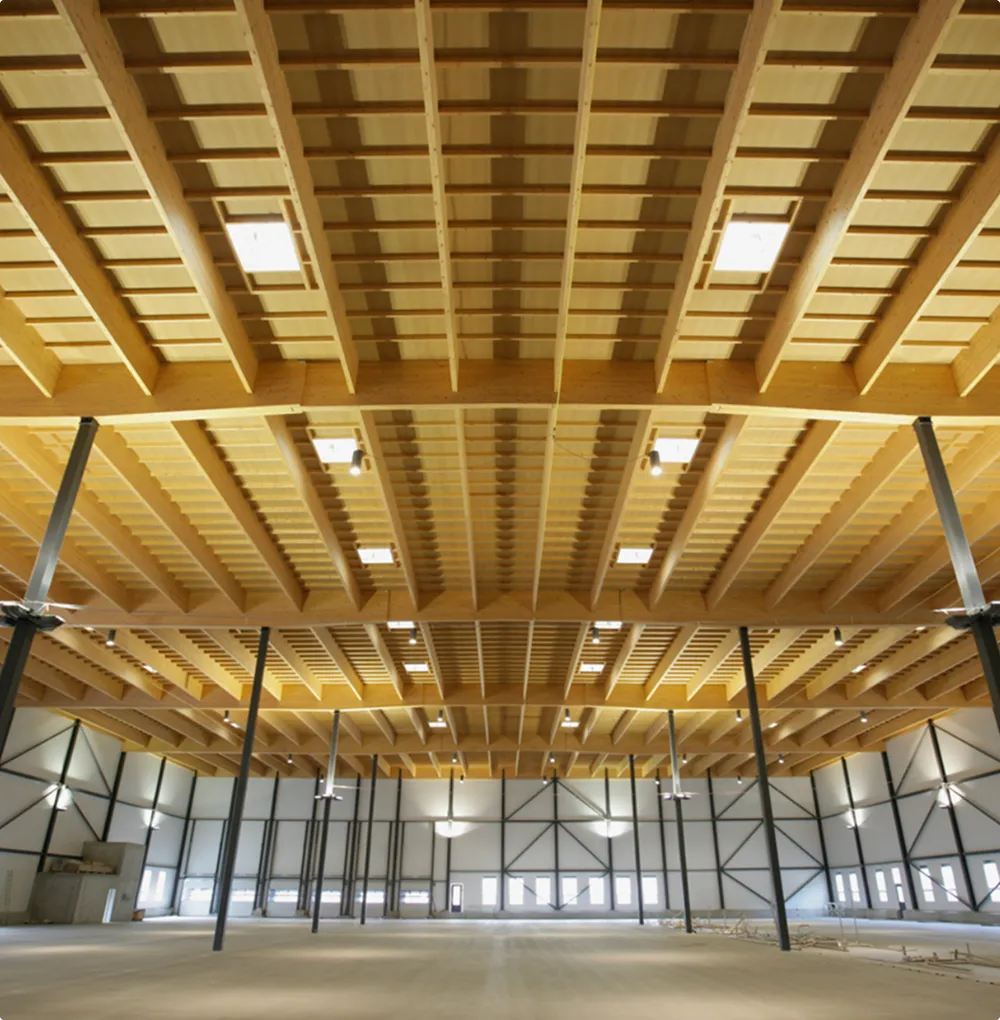
A consistently sustainable approach was implemented for the new production building of Nestlé in Biessenhofen. The building achieves LEED Gold certification with 75 points and meets the highest energy efficiency requirements – exceeding ASHRAE standards by 30%. Predominantly regional materials are used, including doors and panels made of engineered wood and certified timber. An innovative energy concept recovers waste heat from processair (heat recovery) and feeds it into the low-temperature underfloor heatingsystem in the warehouse and shipping areas. The planning also considers modular expandability, optimal daylight use for office workspaces, and a holistic lifecycle perspective. This results in a future-ready industrial construction project that combines environmental responsibility with economic sense.
“The greatest leverage for sustainable industrial buildings lies in efficient processes that are optimally supported by the building .”

“If we want a future, we must build more sustainably. Certifications provide excellent guidance on which measures truly make sense. ”

Your Experts on Sustainability