
Nestlé S.A. – Production Expansion With a New Wet Line for High‑Quality Baby Food
Nestlé S.A. is Switzerland’s largest food company with a strong focus on nutrition and health science. As total contractor, IE Life Science was responsible for construction, logistics and hygiene planning for a new wet line at the Konolfingen site
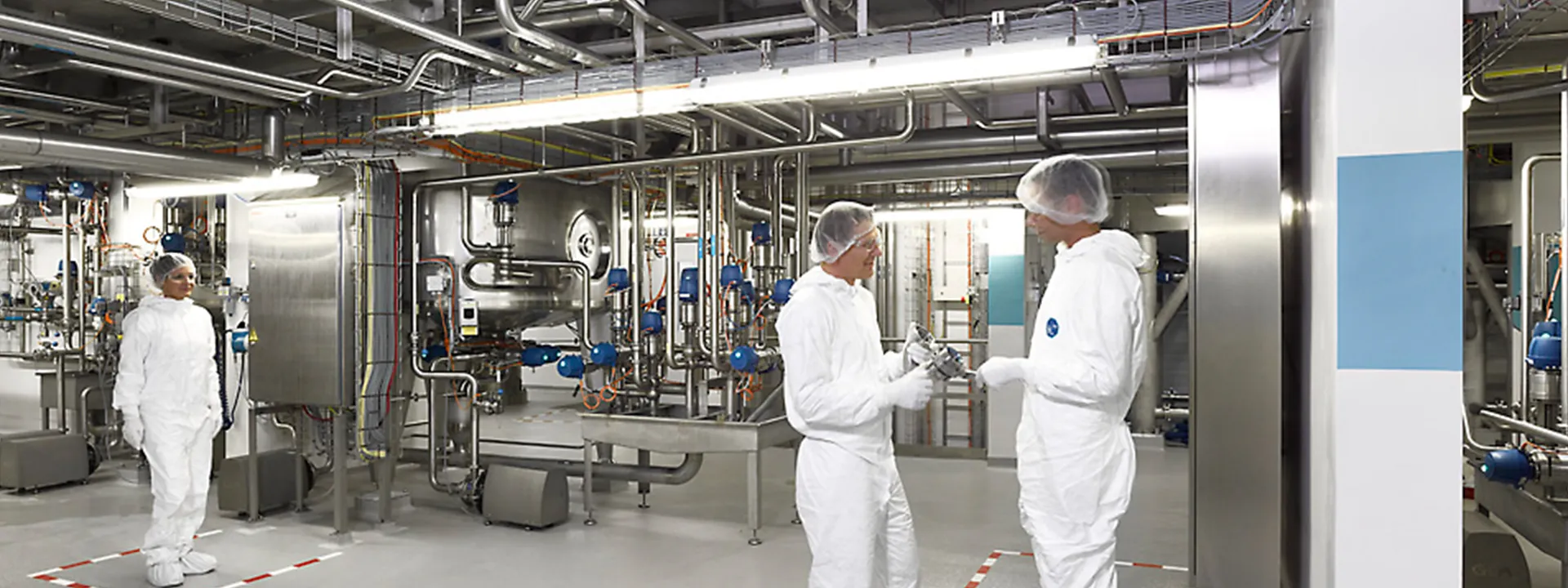
Construction Under Demanding Conditions
Project
Construction planning and overall coordination for a new baby food production facility at the Konolfingen site
Client
Nestle S.A., BE
Key Data


Working Together for Project Success
Services provided by IE Group
- Construction planning and overall coordination
- Planning and implementation as total contractor
- New wet line including additional halls for milk delivery and central tipping
- Comprehensive hygiene and zoning concept
- Flexible construction site logistics under constrained space conditions
- Installation of production systems with special hygiene measures
- Innovative use of removable roof elements for system installation during ongoing operation
- Compliance with Nestlé standards and regulatory hygiene requirements

Challenges & Solutions
Complete Hygiene and Clothing Concept for Maximum Food Safety
Overall Coordination of Construction and Plant Installation During Ongoing Operation
The Project in Detail
Due to steadily increasing demand for baby food and the planned expansion of its product portfolio, Nestlé decided to build a second wet line – referred to as the New Wet Line (NWL) – at the Konolfingen site. The project also included new halls for milk delivery, central tipping and an energy channel to support sustainable production processes. IE Life Science was commissioned as total contractor for the entire project, including construction, logistics and hygiene planning. The expansion was carried out in accordance with a jointly developed masterplan defining which existing buildings were to be reused, extended or replaced.
The Challenges
Demanding framework conditions combined with an ambitious schedule presented several challenges. In addition to the legal requirements for industrial food production, Nestlé’s own stringent internal standards and hygiene specifications comparable to pharmaceutical environments had to be met. Further challenges arose from strict hygiene and zoning requirements as well as very limited available space. This significantly increased the complexity of building services and ventilation planning. At the same time, the new wet line had to be integrated directly into the existing industrial building while ongoing production continued without interruption.
Key Success Factors
On the basis of a jointly developed IE master plan, a higher-level Hygiene concept developed, broken down into the respective areas and defined the appropriate construction measures. To ensure maximum flexibility between the individual production steps, the new wet line (NWL) was built directly in the existing industrial building. In order not to disrupt ongoing operations, the individual construction phases were completed in one go. Only then was the opening to the old building and the continuous installation of the production plant. The installation of special concrete roof elements in the flat roof was particularly innovative. These could be opened specifically to install the staggered production systems.
Deepen Your Knowledge
Discover further details in our Project Insight.