
Automated Guided Vehicles: How to Create a Vendor‑Neutral Specification Sheet
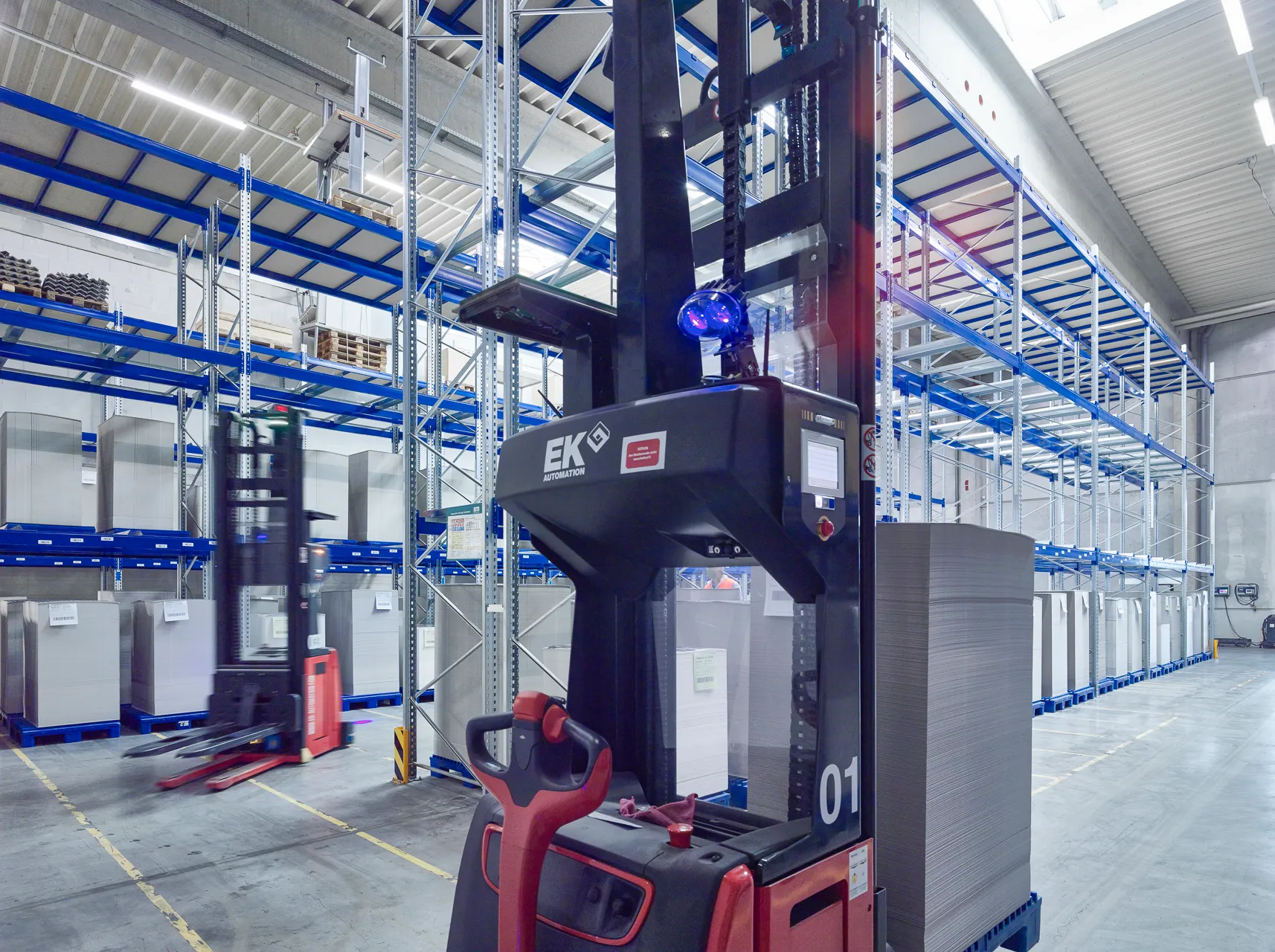
Automated Guided Vehicles: The Path to Create te a Vendor‑Neutral Specification Sheet
Automated Guided Vehicles (AGV) have established themselves as a key technology for efficient and flexible intralogistics. The benefits are obvious: increased level of automation, reduced personnel dependency and improved transparency of material flows. But the introduction of AGV requires careful planning – in particular the preparation of vendor-neutral specifications.
Why a vendor-neutral specification sheet is crucial
In order to select the optimal AGV system for your own requirements, a manufacturer-neutral specification is crucial. It forms the basis for meaningful offers and makes it much easier to select the right supplier.
Thomas Wirbel, CEO of Hager Papprint, confirms: The preparation of the vendor-neutral specification was the basis for meaningful offers. This made it easy to select the right supplier.
9 steps to a successful AGV specification
1. Define context and goals: Clearly delimit the scope of application and affected processes. Set overarching goals such as increasing efficiency, flexibility and safety.
2. Perform environmental analysis: Identify factory layout, production flows, and traffic patterns. Determine environmental conditions such as temperature and humidity.
3. Specify system requirements: Define navigation, load handling and interfaces to existing systems.
4. Define safety requirements: Identify potential sources of danger and specify safety features such as emergency braking and obstacle detection.
5. Plan integration of existing systems: Analyze compatibility and interoperability. Develop integration strategies and necessary adjustments.
6. Ensure flexibility and scalability: ensure adaptability to changing production requirements.
7. Define maintenance and operation: Set maintenance requirements, training requirements, and availability metrics.
8. Analyze costs and ROI: Calculate budget and expected efficiency gains.
9. Anticipate challenges: Address interoperability, technological uncertainties, and employee acceptance early on.
The decisive competitive advantage
Florian Alexander, Head of Logistics at IE Munich, puts it in a nutshell: In highly competitive markets, your own logistics processes can be the decisive competitive advantage. The true efficiency potential lies in perfectly coordinated flows of goods and people.
Download the full white paper
The detailed practical guide shows you step by step how to create a manufacturer-neutral specification – including a practical example from Hager Papprint and checklists for the integration of existing systems.
Other Interesting Articles

Success Factors for GMP Construction and Qualification Projects

Make Early Decisions. Integrate Correctly.

Automation That Pays Off: Finding the Right Balance Between the Man and the Machine

More Flexibility, More Capacity, Ready for What’s Next

Strategic Planning for Bakeries and Confectioneries: The Path to a Master Plan

Pharmaceutical Logistics: More Safety, Speed and Efficiency Through Holistic Planning

Management of Hazardous Substances in Warehouses: Four Areas of Requirement for Industrial Construction

The Food Factory of the Future: Master Plan for a Future-Proof Food Production

Smart Proteins, Smart Factory: Efficient Production for Alternative Proteins

The Bakery of the Future: 4 Success Factors for Sustainable Bakery Production